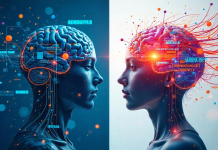
Artificial Intelligence (AI) is transforming the world, but not all AI is created equal. One of the most prevalent forms is Narrow AI, also known as Weak AI. Unlike General AI, which aims to mimic human intelligence across multiple domains, Narrow AI is designed for specific tasks—excelling in areas like speech recognition, recommendation systems, and fraud detection.
From voice assistants like Siri and Alexa to spam filters, autonomous cars, and AI-powered chatbots, Narrow AI is deeply embedded in our daily lives. It leverages machine learning and deep learning algorithms to enhance efficiency, automate processes, and provide personalized experiences. This blog explores the concept of Narrow AI, how it differs from General AI, and its real-world applications that are shaping the future of technology.
Artificial Intelligence (AI) is revolutionizing industries, but not all AI systems are created equal. AI can be broadly classified into Narrow AI (Weak AI) and General AI (Strong AI). Narrow AI, which powers most of today’s technological advancements, is designed to perform specific tasks efficiently. Unlike General AI, it does not possess human-like reasoning or adaptability. This blog explores Narrow AI, its applications, real-world examples, and a comparison with General AI.
Understanding Narrow AI
Narrow AI refers to artificial intelligence systems designed to perform a single or limited set of tasks. These systems operate within predefined parameters and lack self-awareness or the ability to generalize knowledge beyond their designated function.
Key Characteristics of Narrow AI:
- Task-specific: Designed for a particular function (e.g., speech recognition, image processing, recommendation systems).
- No self-awareness: Unlike human intelligence, Narrow AI does not think or reason beyond its programming.
- Data-driven: Operates using large datasets and machine learning models to make predictions and improve performance over time.
How Narrow AI Powers Everyday Technology
Narrow AI is embedded in various technologies we use daily. Some key applications include:
1. Voice Assistants (Alexa, Siri, Google Assistant)
These AI-driven assistants use Natural Language Processing (NLP) to understand commands and provide responses. They are trained to recognize speech, search the web, set reminders, and control smart home devices.
2. Recommendation Systems (Netflix, YouTube, Spotify, Amazon)
Narrow AI powers recommendation engines that analyze user behavior and suggest relevant content. For instance, Netflix recommends shows based on viewing history, and Amazon suggests products based on past purchases.
3. Chatbots & Customer Support (ChatGPT, Virtual Assistants, Automated Help Desks)
AI chatbots provide instant customer support by answering FAQs, processing orders, and troubleshooting issues efficiently.
4. Facial Recognition (iPhone Face ID, Surveillance Systems)
Facial recognition technology powered by Narrow AI is widely used for security and authentication purposes, such as unlocking smartphones or identifying individuals in surveillance systems.
5. Healthcare Diagnosis & Medical AI (IBM Watson, Google DeepMind’s AlphaFold)
AI-powered systems assist doctors in diagnosing diseases, predicting patient outcomes, and analyzing medical images.
6. Autonomous Vehicles (Tesla’s Autopilot, Waymo’s Self-Driving Cars)
Although fully autonomous vehicles are still evolving, Narrow AI enables features like lane-keeping assistance, adaptive cruise control, and object detection.
Real-World Examples of Narrow AI in Action
- Google Translate: Uses AI-driven language models to translate text in real time.
- Tesla’s Autopilot: Uses AI for lane detection, object recognition, and driving assistance.
- Amazon Alexa: Executes voice commands, controls smart home devices, and provides information based on user queries.
- Grammarly: AI-powered writing assistant that suggests grammar, spelling, and style improvements.
Narrow AI vs. General AI :
While Narrow AI is widely used today, researchers are working toward General AI, which would function similarly to human intelligence. Here’s a comparison:
| Feature | Narrow AI | General AI |
|---|---|---|
| Definition | AI designed for specific tasks | AI capable of human-like reasoning & adaptability |
| Task Handling | Limited to predefined tasks | Can perform any intellectual task |
| Self-Learning | Improves within its domain | Learns across multiple domains |
| Examples | Alexa, Google Translate, Tesla Autopilot | Hypothetical (Future AI like in Sci-Fi movies) |
| Awareness & Consciousness | No self-awareness | Can reason, adapt, and think like a human |
| Existence Today | Actively used | Still in research and development |
Conclusion
Narrow AI is the driving force behind many modern technologies, making everyday tasks more efficient and automated. While General AI remains a futuristic goal, the advancements in Narrow AI continue to transform industries such as healthcare, finance, transportation, and entertainment. As AI evolves, the boundary between Narrow and General AI may blur, but for now, Narrow AI remains the dominant force in AI-powered innovations.