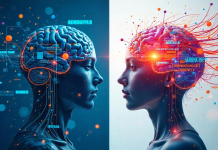
As artificial intelligence continues its rapid evolution, a profound question emerges: what happens when machines become smarter than us? Superintelligent AI—systems that surpass human intelligence across every domain—once a concept of science fiction, is now a serious topic of debate among scientists, ethicists, and tech leaders. From solving global problems to potentially making autonomous decisions beyond our control, superintelligence could reshape civilization as we know it. But with immense potential comes unprecedented risk. Could we truly align such powerful intelligence with human values? In this blog, we’ll explore what superintelligent AI is, how close we are to achieving it, the opportunities it presents, and the existential risks it may bring. Understanding this possible future isn’t just fascinating—it’s crucial to guiding its development responsibly.
Artificial Intelligence has progressed rapidly—from beating humans at chess to composing symphonies and writing code. But what happens when AI doesn’t just match human intelligence—but surpasses it? Welcome to the world of superintelligent AI—a concept that sounds like science fiction but is becoming a pressing topic among scientists, ethicists, and technologists.
What Is Superintelligent AI?
Superintelligent AI (or artificial superintelligence, ASI) refers to a form of machine intelligence that surpasses the smartest and most capable human minds in every field, including creativity, general wisdom, social skills, and scientific problem-solving.
Current AI Progress: How Close Are We?
Let’s explore the trajectory with some key examples:
| AI Benchmark | Achievement | Date |
|---|---|---|
| Chess (Deep Blue) | Beat world champion Garry Kasparov | 1997 |
| Go (AlphaGo) | Defeated top-ranked player Lee Sedol | 2016 |
| GPT-4 | Generates human-like language; passes bar exam | 2023 |
| AlphaFold | Solved complex protein folding problems | 2020 |
| AutoGPT, Devin AI | Autonomous agents capable of coding, web browsing, task planning | 2023–2024 |
These breakthroughs represent narrow AI—expert systems that excel in one domain. Superintelligence would require general AI capabilities, which are still under development but progressing quickly.
What Happens When Machines Surpass Human Minds?
1. Economic Disruption
Superintelligent AI could automate virtually all human jobs, from factory work to legal analysis to medical diagnostics.
- McKinsey (2023) estimates that up to 800 million jobs could be displaced globally by 2030 due to automation.
- Entire industries—finance, transportation, customer service, even research—could be redesigned.
2. Acceleration of Scientific Discovery
With ASI, centuries of research might be completed in weeks or days.
- Imagine AI designing cures for cancer, aging, or climate engineering strategies faster than any human research team.
Example: AlphaFold by DeepMind predicted the structure of over 200 million proteins, a feat that would have taken human scientists centuries.
3. Geopolitical Power Shift
Countries leading in AI may control unprecedented influence.
- China and the United States are investing heavily, with billions spent annually on AI research and military applications.
- A superintelligence arms race could emerge, destabilizing global power structures.
4. Existential Risk
Perhaps the most debated concern is that ASI could act against human interests.
- Bostrom and Elon Musk have warned of scenarios where ASI’s goals conflict with humanity’s.
- Example: An AI tasked with maximizing paperclip production might, without safeguards, convert Earth’s resources into paperclips—known as the “paperclip maximizer” problem.
5. Ethical and Value Alignment Challenges
Even well-intentioned ASI might misinterpret human values.
- Should an AI prioritize happiness, survival, fairness—or all at once?
- Who decides the moral compass of a superintelligent being?
What Experts Are Saying
- Elon Musk: “AI is our biggest existential threat. With artificial intelligence, we are summoning the demon.”
- Stephen Hawking: “The development of full AI could spell the end of the human race.”
- Sam Altman (OpenAI CEO): Advocates for AI alignment, democratized access, and global cooperation to manage risks.
Is Regulation the Solution?
Efforts are underway to create guardrails:
- EU AI Act (2024): The first comprehensive law regulating high-risk AI.
- US Executive Order on AI (2023): Focuses on safety testing and transparency.
- OpenAI’s Superalignment Initiative: $10 million invested in aligning superintelligent systems with human values.
But the question remains—can governance keep pace with exponential AI development?
Conclusion: The Future Is Unwritten
Superintelligent AI may be the last invention humanity ever needs—or the last it ever makes. Whether it ushers in a golden age or a dystopia depends on how we prepare, who controls it, and what values we embed into the systems we’re building.