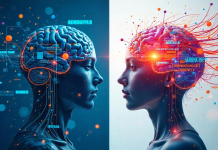
Generative AI, a cutting-edge field at the intersection of artificial intelligence and creativity, enables machines to produce original content, from images and music to text and even entire narratives. Unlike traditional AI, which operates according to predefined rules, generative AI learns from vast data sets to autonomously generate novel results that mimic human creativity. Techniques such as generative adversarial networks (GANs), variational autoencoders (VAEs), and transformers have revolutionized the capabilities of machines to understand and generate complex, realistic content. With applications spanning art, design, entertainment, and more, generative AI holds immense promise for enhancing human creativity, automating content creation, and pushing the boundaries of what’s possible in the realm of artificial intelligence. As this field continues to evolve, it promises to reshape industries, inspire innovation, and challenge our perceptions of creativity and intelligence.
What is Generative-AI?
Generative AI refers to a branch of artificial intelligence focused on creating models capable of generating new data, often imitating patterns and characteristics present in training data. These models aim to produce results that are indistinguishable from data examples observed during training.
Generative AI encompasses several techniques, including generative adversarial networks (GANs), variational autoencoders (VAEs), and autoregressive models. GANs, for example, involve two neural networks (the generator and the discriminator) that compete with each other to improve the quality of the generated samples. VAEs learn a probabilistic distribution of the input data, allowing new samples to be generated from the learned distribution. Autoregressive models predict the next element in a sequence based on previous elements, allowing the generation of sequential data.
Generative AI applications span a wide range of fields, including image generation, text generation, music composition, drug discovery, and more.
History of Generative-AI :
The academic field of artificial intelligence (AI) emerged in 1956 at Dartmouth College, with subsequent waves of advances and ethical debates reflecting philosophical investigations dating back to ancient times. Automation in art dates back to ancient Greece, with concepts evolving over the centuries, as exemplified by Maillardet’s automaton in the 19th century.
Alan Turing’s seminal 1950 paper laid the foundation for AI, although progress was initially slow due to technological limitations. The 1956 Dartmouth workshop catalyzed two decades of rapid advances. In the 1970s, Harold Cohen was generating AI art with AARON.
Markov chains, developed by Andrey Markov in the early 20th century, have long modeled natural language, enabling probabilistic text generation. Machine learning, which leverages statistical models, saw significant progress in the late 2000s with the rise of deep learning, particularly in image classification and natural language tasks.
In 2014, generative models such as variational autoencoders and generative adversarial networks (GANs) enabled deep neural networks to learn generative tasks, culminating in the creation of complete images. In 2017, the Transformer network further improved generative models, leading to the development of GPT-1 in 2018 and GPT-2 in 2019, demonstrating unsupervised learning on various tasks.
By 2021, advancements like DALL-E and Midjourney showcased high-quality AI art from natural language prompts. In March 2023, GPT-4 was released, sparking debates about its potential as an artificial general intelligence (AGI) system, although some academics disputed this claim, noting AI’s current distance from “human general intelligence” to from 2023.
Modalities of Generative-AI :
Generative AI refers to systems or models that can create new instances of data similar to the training data. There are several modalities or types of generative AI techniques, each with its own approach to generating data. Some of the featured modalities include:
- Variational Autoencoders (VAE):
- VAEs are a type of neural network architecture that learns to encode input data into a lower-dimensional latent space and then decode it back to the original data space. They are trained to generate data by sampling the learned latent spatial distribution.
- Generative Adversarial Networks (GAN):
- GANs consist of two neural networks, a generator and a discriminator, which are trained simultaneously in a competitive environment. The generator learns to generate data samples that are indistinguishable from real data, while the discriminator learns to differentiate between real and fake data. GANs have been successful in generating realistic images, videos, and even text.
- Autoregressive models:
- Autoregressive models are probabilistic models that generate data one element at a time, generally modeling the conditional probability distribution of each element given the previous elements. Examples include autoregressive moving average (ARMA) models, autoregressive integrated moving average (ARIMA) models, and more recently, autoregressive models based on neural networks such as PixelCNN and WaveNet.
- Flow-based models:
- Flow-based models learn a bijective mapping between input and output spaces, allowing for efficient sampling and density estimation. These models are trained to transform a simple distribution (e.g., Gaussian) into a data distribution, allowing the generation of realistic samples.
- Transformer-based models:
- Transformer-based models, such as OpenAI’s GPT (Generative Pre-trained Transformer) series, are pre-trained language models capable of generating coherent and contextually relevant text. These models use self-attention mechanisms to capture long-range dependencies in the data and are tailored to specific generative tasks.
- Deep Reinforcement Learning (DRL):
- Although traditionally used for sequential decision-making tasks, deep reinforcement learning can also be used for generative tasks. Agents can be trained to generate sequences of actions (for example, in video game environments) or other types of data through interactions with an environment and reinforcing signals.
- Probabilistic graphical models (PGM):
- PGMs such as Bayesian networks and Markov random fields provide a framework for representing and reasoning about complex probability distributions. They can be used for generative modeling by specifying the joint distribution of variables and sampling from it to generate new data instances.
These modalities offer different strengths and weaknesses, and the choice of which to use depends on the specific task, the nature of the data, and the computational resources available.
Applications and Benefits of Generative-AI :
Generative AI, which encompasses various machine learning techniques aimed at creating data, content or results that resemble and often go beyond what humans can produce, has numerous applications and benefits in various fields. Here are some of them:
- Content Generation: Generative AI can create various forms of content, including text, images, videos, and music. This can be useful for generating news articles, blog posts, creative writing, artwork, and more.
- Data Augmentation: In fields such as computer vision and natural language processing, generative AI can be used to create synthetic data to train machine learning models. This helps augment limited data sets and improve model performance.
- Creative Design: Generative AI can assist in creative design tasks such as generating logos, website designs, product designs, and architectural plans. It can provide inspiration and automate repetitive design tasks.
- Personalization: By analyzing user preferences and behavior, generative AI can generate personalized recommendations, ads, and product suggestions. This improves the user experience and improves engagement.
- Healthcare: Generative AI can help in medical image analysis, such as generating 3D reconstructions from 2D images or generating synthetic medical images to train diagnostic models. It can also help in drug discovery by generating molecular structures with desired properties.
- Chatbots and virtual assistants: Generative AI powers conversational agents that can interact with users in natural language. These chatbots and virtual assistants can provide customer service, answer queries, and even engage in small conversations.
- Arts and Entertainment: Generative AI has been used to create works of art, generate musical compositions, and even produce entire movies. It can push the boundaries of creativity and allow for new forms of expression.
- Data synthesis and simulation: Generative AI can simulate realistic scenarios in fields such as gaming, robotics, and autonomous driving. You can generate synthetic environments, objects, and interactions for training and testing purposes.
- Text Translation and Summarization: Generative AI can improve machine translation systems by generating more accurate translations and can also generate concise summaries of long texts.
- Fraud Detection and Cybersecurity: Generative AI can generate synthetic data to train fraud detection algorithms and simulate cyberattacks to test security systems. It can help organizations better prepare and mitigate risks.
- Education and Training: Generative AI can create interactive learning materials, generate practice problems, and even develop virtual tutors that adapt to individual learning styles.
- Personal assistants and productivity tools: Generative AI can help users with tasks such as scheduling appointments, composing emails, and organizing information. It can act as a digital assistant to help users be more productive.
Overall, Generative AI has immense potential to revolutionize various industries and domains by automating tasks, enhancing creativity, improving decision making, and personalizing experiences. However, it also raises ethical concerns related to bias, privacy, and potential misuse of generated content. Therefore, careful consideration and responsible deployment are essential to harness its benefits effectively.