Tether (USDT) is a popular cryptocurrency designed to maintain a stable value by pegging it to traditional fiat currency reserves, such as the US dollar, in a 1:1 ratio. Launched in 2014, USDT has become a fundamental component of the cryptocurrency ecosystem, serving as a stable store of value and a bridge between cryptocurrencies and the broader financial markets. It provides users with a reliable means to trade and transfer digital assets without the price volatility typically associated with other cryptocurrencies. USDT is widely used for trading on cryptocurrency exchanges, facilitating cross-border transactions, and as a hedging tool for traders seeking to reduce exposure to cryptocurrency market fluctuations.
What is Tether – USDT ?
Tether (USDT) is a type of cryptocurrency known as a stablecoin. Stablecoins are digital currencies designed to maintain a stable value by pegging them to a reserve of assets such as fiat currencies (for example, US dollars), other cryptocurrencies, or commodities. Tether’s primary goal is to provide a stable means of exchange and store of value in the volatile world of cryptocurrencies.
Here are some of the key features of Tether (USDT):
Stability: Tether is designed to be valued 1:1 with a specific reserve asset, usually the US dollar. This means that one USDT token should always be worth approximately one US dollar.
Reserve Backup: Tether Limited, the company behind Tether, claims to maintain an asset reserve equal to or greater than the total number of USDT tokens in circulation. This is intended to provide confidence in the value and stability of the token.
Blockchain Technology: Tether is often issued on various blockchain platforms, including Ethereum (USDT-ERC20), Tron (USDT-TRC20), and others. These tokens are typically transferred and traded on these respective blockchains.
Liquidity and trading: USDT is widely used in the cryptocurrency ecosystem to trade and transfer value. It provides a convenient way for traders to enter and exit cryptocurrencies without using traditional fiat currencies.
Transparency Concerns: Tether has faced controversy and legal scrutiny due to concerns about the actual backing of its reserves and transparency. Critics have raised questions about whether Tether has enough reserves to support the large number of USDT tokens in circulation.
Regulatory Environment: The regulatory status of Tether and stablecoins in general may vary from jurisdiction to jurisdiction. Some governments have taken steps to regulate or vet stablecoin issuers, while others have embraced them as a useful financial innovation.
It is important to note that the stablecoin market and the regulations surrounding it may have evolved since my last knowledge update in September 2021. Therefore, it is advisable to consult up-to-date sources and research before interacting with Tether or any another cryptocurrency.
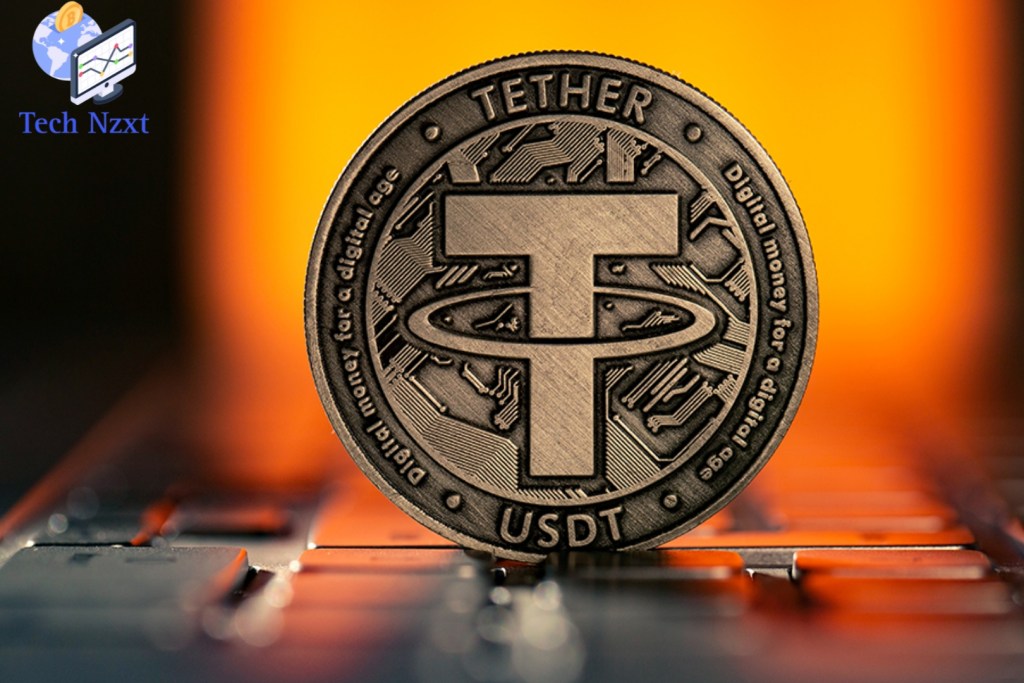
History of Tether – USDT:
Tether (USDT) is a cryptocurrency that was created to provide stability in the volatile world of cryptocurrencies by tying its value to a reserve of real-world assets, specifically the US dollar. Here is a brief history of Tether:
Founded (2014): Tether was founded in 2014 by a Hong Kong-based company called Tether Limited. The company’s goal was to create a cryptocurrency that maintained a 1:1 value ratio with the US dollar, meaning that one USDT would always be worth one dollar.
Initial launch (2014): Tether was initially launched on the Bitcoin blockchain using the Omni Layer protocol as a way to issue and manage Tether tokens. These tokens were backed by an equivalent amount of US dollars held in reserve by Tether Limited.
Growing popularity (2015-2017): Tether gained popularity as a stablecoin in the cryptocurrency market, primarily because it allowed traders and investors to move funds in and out of cryptocurrencies without the need to convert them to fiat currencies and incur additional fees. .
Transition to multiple blockchains (2017): In 2017, Tether expanded beyond the Bitcoin blockchain and began issuing USDT tokens on other blockchain platforms, including Ethereum (as an ERC-20 token) and others. . This move increased the accessibility and usability of USDT.
Controversies and Concerns (2017-2019): Tether faced criticism and controversies during this period. There was concern about whether Tether had enough reserves to back all of its tokens, as it was not audited regularly. This generated skepticism and legal challenges.
Continued Growth (2021-2023): Despite controversies, Tether remained one of the most used stablecoins in the cryptocurrency market. It played an important role in facilitating trading and liquidity in the crypto space.
Expanding Use Cases (2021-2023): Tether found use not only as a stable store of value but also as a bridge between different cryptocurrencies and trading pairs on various exchanges. It became an essential tool for traders and investors in the cryptocurrency ecosystem.
It is important to note that the cryptocurrency space is very dynamic and subject to regulatory changes, technological advances, and market changes. Therefore, the status and history of Tether may have evolved since my last knowledge update in September 2021. It is always good practice to check the most up-to-date information from reliable sources if you are interested in the current status of Tether or any other cryptocurrency.
Design of Tether – USDT:
Tether (USDT) is a type of cryptocurrency known as a stablecoin, which is designed to maintain a stable value by being pegged to a reserve of real-world assets, typically a fiat currency such as the US dollar. Tether is often used in the cryptocurrency market as a way for traders to quickly move their funds in and out of cryptocurrencies without the volatility associated with other cryptocurrencies such as Bitcoin or Ethereum. Here is a basic overview of the design of Tether (USDT):
Pegging Mechanism: Tether’s main design feature is its pegging to a specific fiat currency, typically the US dollar. This means that for every USDT in circulation, the issuer must keep an equivalent amount of US dollars in reserve. This is intended to provide stability and confidence in the value of USDT.
Issuance and redemption: Tether tokens are created and redeemed through a process managed by the company behind Tether, usually Tether Limited. When someone wants to acquire USDT, they send an equivalent amount of US dollars to Tether Limited and in return receive USDT tokens. Conversely, when someone wants to withdraw their USDT, they send the tokens to Tether Limited and receive US dollars in return.
Transparency: To maintain trust and verify that the asset reserve matches the amount of USDT in circulation, Tether Limited often publishes periodic audits or certifications of its reserves. Users can check these reports to ensure that the link is maintained.
Blockchain: Tether is available on multiple blockchain networks, including Ethereum (as an ERC-20 token), Tron, and others. The choice of blockchain can affect the speed and cost of transactions.
Use Cases: Tether is commonly used for various purposes in the cryptocurrency ecosystem. Traders use it as a stable intermediary for trading and arbitrage. It is also used by individuals and companies as a store of value or a means to transfer funds across borders.
Regulatory Compliance: Tether has faced regulatory scrutiny due to concerns about its reserves and transparency. The company has endeavored to comply with regulations in various jurisdictions, which may include KYC/AML (Know Your Customer/Anti-Money Laundering) procedures for users.
Security: As with any cryptocurrency, security is paramount. Tether tokens are generally secured using blockchain technology and private keys. Users are advised to store their USDT in secure wallets and follow best practices to safeguard their holdings.
Decentralization: Tether operates with a certain level of centralization because it relies on a single issuer (Tether Limited) to hold reserves and manage issuance and redemption. This centralization has raised concerns in the crypto community as it deviates from the decentralized spirit of many other cryptocurrencies.
It is essential to note that the design and implementation of Tether can evolve, and it is crucial that users stay informed of any changes, regulatory developments, or audits related to Tether to make informed decisions about its use in the cryptocurrency space. Additionally, there are other stablecoins on the market with different designs and mechanisms, each with their own set of features and trade-offs.
How Tether – USDT WORKS:
Tether (USDT) is a type of cryptocurrency known as a stablecoin. Its primary function is to provide stable value, typically pegged to a fiat currency such as the US dollar (hence the name Tether). USDT is designed to maintain a 1:1 value ratio with the US dollar, meaning that 1 USDT should always be worth approximately 1 USD.
This is how Tether (USDT) works:
- Issuance: Tether Ltd. is the company behind Tether and is responsible for creating and issuing USDT tokens. Tether tokens can be created when someone deposits US dollars (or other accepted fiat currencies) into the Tether bank account. Tether Ltd. then mint an equivalent amount of USDT tokens and make them available for purchase or trading on various cryptocurrency exchanges.
- Fiat Reserves: Tether claims to maintain a reserve of fiat currency (such as USD, EUR, etc.) in a bank account to support the value of USDT in circulation. This is intended to provide confidence to users that each USDT token is backed by a real equivalent amount of fiat currency. However, there have been concerns and controversies over whether Tether has always maintained full reserves.
- 1:1 pegging: Tether aims to keep the value of 1 USDT equal to 1 US dollar. To do this, they periodically audit their reservations and make the necessary adjustments. If the price of 1 USDT starts to deviate from 1 USD, Tether can issue or redeem tokens to bring the price back in line with the peg.
- Trading and Usage: Tether is widely used in the cryptocurrency ecosystem for various purposes. Traders use it as a stable store of value to move funds in and out of cryptocurrencies during volatile market conditions. It is also used on cryptocurrency exchanges as a trading pair against other cryptocurrencies. Additionally, some companies and individuals use USDT as a way to avoid the price volatility that is often associated with other cryptocurrencies such as Bitcoin or Ethereum.
- Transparency and auditing: Tether claims to undergo regular audits to demonstrate the support of USDT tokens with real-world fiat currency. However, Tether’s transparency and audit practices have been a topic of controversy and there have been concerns about the adequacy of these audits.
Tether – USDT Applications:
Tether (USDT) is a type of cryptocurrency known as a stablecoin. It was designed to maintain a stable value by being pegged to a reserve of assets, typically at a 1:1 ratio to the US dollar. Tether has several applications, mainly around its stability and usefulness in the cryptocurrency ecosystem. Here are some common Tether applications:
Price stability: Tether is often used as a means to hedge against the volatile nature of other cryptocurrencies such as Bitcoin (BTC) and Ethereum (ETH). Traders and investors can convert their holdings to USDT in times of market uncertainty to preserve the value of their assets.
Trading Pair: Tether is frequently used as a trading pair on cryptocurrency exchanges. Many crypto-to-crypto trading pairs are denominated in USDT rather than fiat currencies, as they allow traders to easily enter and exit positions without having to deal with traditional banking systems.
Arbitrage: Traders can use Tether to take advantage of price differences between different cryptocurrency exchanges. By quickly transferring USDT between exchanges, they can exploit price disparities and make profits.
Remittances: Tether can be used for cross-border remittances and international money transfers, taking advantage of its lower transaction fees and faster settlement times compared to traditional financial systems.
Access to cryptocurrency markets: Some cryptocurrency investors use Tether to access various cryptocurrency markets. They can deposit USDT on exchanges that do not offer direct fiat currency trading pairs, allowing them to trade a wide range of cryptocurrencies.
Stablecoin for DApps: Tether can be integrated into decentralized applications (DApps) and smart contracts to provide price stability. This is particularly useful in DeFi (Decentralized Finance) applications where users want a stable store of value within the blockchain ecosystem.
ICO Funding and Token Sales: Initial coin offerings (ICOs) and token sales often accept Tether as a form of payment. It provides a stable means for participants to invest in new blockchain projects.
Safe Haven: In times of extreme market volatility or regulatory uncertainty, Tether is sometimes used as a safe haven asset, allowing users to move their more volatile cryptocurrency funds into a stable store of value.
Escape fiat restrictions: In regions where there are strict capital controls or limited access to traditional banking services, people can use Tether as a way to move and store value outside the traditional financial system.
Cryptocurrency purchases: Tether can be used to purchase other cryptocurrencies directly. People can buy USDT with fiat currency and then use it to buy other digital assets.
It is essential to note that while Tether is widely used, it has also faced scrutiny and controversy, particularly regarding its claims of being fully backed by US dollars. The company behind Tether has faced legal challenges and regulatory investigations, which have raised concerns about its transparency and reserves. Therefore, people and companies using Tether should exercise caution and perform due diligence.