Polkadot is a cutting-edge blockchain platform that aims to revolutionize the way blockchains interact and communicate with each other. Launched in 2020, Polkadot was created by Dr. Gavin Wood, one of the co-founders of Ethereum. At its core, Polkadot employs a unique multi-chain architecture, allowing multiple blockchains, known as parachains, to coexist within its network. This innovative approach improves scalability, interoperability and security, making it an attractive option for developers and projects looking to create decentralized applications and services (DApps). DOT is Polkadot’s native cryptocurrency and plays a critical role in the network’s governance and staking. With its forward-thinking technology and dynamic ecosystem, Polkadot stands as a promising competitor in the ever-evolving blockchain landscape.
What is Polkadot – DOT?
Polkadot (DOT) is a blockchain platform and cryptocurrency that aims to facilitate interoperability and scalability across different blockchains. It was created by Dr. Gavin Wood, one of the co-founders of Ethereum, and was first launched in May 2020. Polkadot is often referred to as a “multi-chain network” because it enables different blockchains, known as parachains, to connect and communicate with each other.
Key features and concepts of Polkadot include:
- Multi-Chain Architecture: Polkadot’s design allows multiple blockchains to operate in parallel, each with its own unique characteristics and purposes. These interconnected blockchains can be customized to suit various use cases, such as public chains, private chains, and consortium chains.
- Interoperability: Polkadot provides a framework for parachains to communicate and share information securely. This interoperability enables data and assets to move between different chains within the Polkadot network, enhancing the overall utility of the platform.
- Shared Security: Polkadot employs a novel consensus mechanism called Nominated Proof-of-Stake (NPoS) to secure the network. Validators are chosen through a staking and nomination process, and they are responsible for confirming transactions and maintaining the integrity of the parachains. This shared security model helps prevent attacks and enhances the overall security of the network.
- Upgradability: Polkadot’s governance model allows for protocol upgrades without the need for hard forks. This means that the platform can evolve and adapt over time to meet the changing needs of its users.
- Polkadot’s Native Token (DOT): DOT is the native cryptocurrency of the Polkadot network. It serves various purposes within the ecosystem, including staking for network security, participating in governance decisions, and paying transaction fees.
- Governance: Polkadot has a decentralized governance system that allows token holders to participate in decision-making processes. They can propose and vote on changes to the protocol, making it a community-driven platform.
Polkadot is often seen as part of the broader ecosystem of blockchain projects working on improving scalability and interoperability, and it aims to address some of the limitations of earlier blockchain networks like Bitcoin and Ethereum. Its goal is to create a more interconnected and adaptable blockchain ecosystem that can support a wide range of decentralized applications (DApps) and use cases.
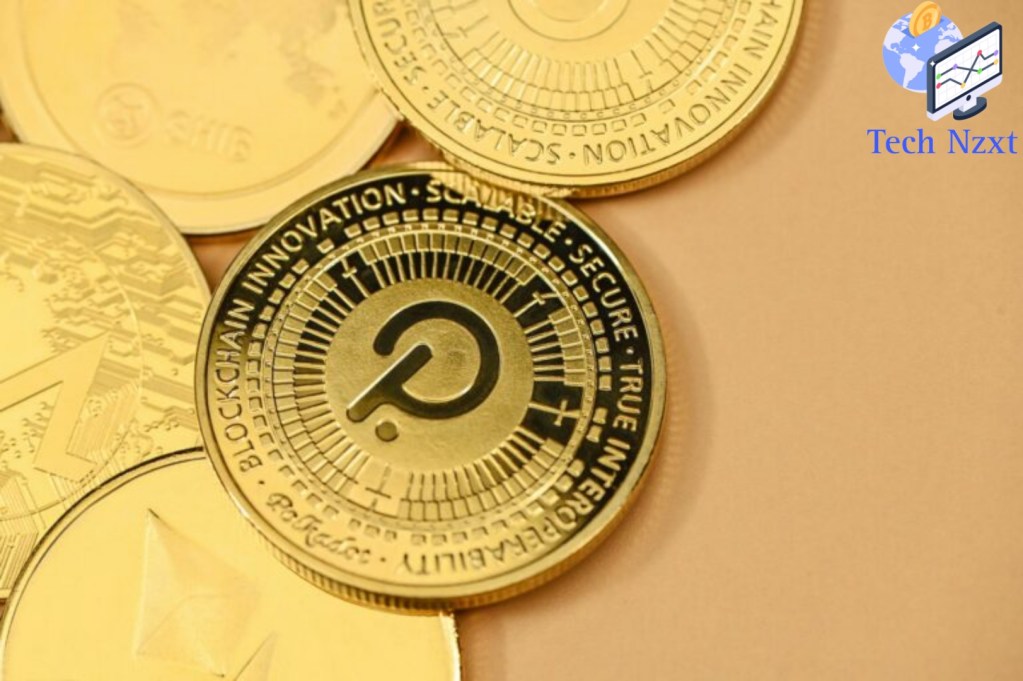
History of Polkadot – DOT:
Polkadot (DOT) is a blockchain platform that was created to address some of the scalability, interoperability, and governance issues faced by existing blockchain networks. It was developed by Dr. Gavin Wood, one of the co-founders of Ethereum, and launched in May 2020. Here is a brief history of Polkadot:
Genesis of the Idea (2016):
The idea of Polkadot began to take shape in 2016, when Dr. Gavin Wood published the Polkadot whitepaper. Wood, who had previously been the CTO of Ethereum, recognized the need for a multi-chain network that could facilitate communication and data sharing between different blockchains.
Formation of the Web3 Foundation (2017):
In 2017, the Web3 Foundation was created to oversee the development of Polkadot and promote a decentralized web. The foundation raised funds through a token sale, laying the foundation for the development of the Polkadot ecosystem.
Development and Testnets (2017-2019):
Over the next few years, the Polkadot team worked on developing the platform, conducting multiple testnet launches and perfecting its technology. These testnets allowed developers to experiment with the Polkadot ecosystem and identify and address issues.
Mainnet Launch (May 26, 2020):
On May 26, 2020, the Polkadot mainnet, known as “Kusama,” was launched. Kusama serves as a canary network for Polkadot, allowing developers to test new features and updates before deploying them to the Polkadot mainnet.
Parachain Slot Auctions (2021):
One of the key features of Polkadot is its ability to support multiple blockchains known as “parachains.” In 2021, Polkadot introduced parachain slot auctions, allowing projects to bid for slots on the network. These auctions determine which parachains can connect to the Polkadot network.
Ecosystem growth (2020-2021):
The Polkadot ecosystem began to grow rapidly after the mainnet launch, with several projects and teams built on the platform. These projects span a wide range of use cases, including decentralized finance (DeFi), non-fungible tokens (NFT), and more.
Continuous development (2021-present):
Polkadot continues to undergo development and improvements. The network’s governance system, which involves DOT token holders in decision-making, plays a crucial role in guiding its evolution.
Interoperability and updates (2021-present):
Interoperability remains a central focus for Polkadot. The platform aims to enable fluid communication between different blockchains and networks, allowing for a more interconnected and versatile blockchain ecosystem.
Polkadot has gained significant attention in the blockchain and cryptocurrency space due to its unique approach to solving some of the industry’s challenges. Its ability to support multiple blockchains, update seamlessly, and foster interoperability has made it a major player in the blockchain landscape. Please note that developments may have occurred after my knowledge deadline in September 2021, so I recommend checking the latest sources for the most up-to-date information on Polkadot and its ecosystem.
Design of Polkadot – DOT:
Polkadot (DOT) is a multi-chain network designed to enable interoperability between different blockchains. It was created by Dr. Gavin Wood, one of the co-founders of Ethereum. Polkadot’s design is based on several key principles and components:
Relay Chain: The core of the Polkadot network is the Relay Chain. This is the main blockchain that coordinates communication between all parachains (parallel chains) in the network. The main function of Relay Chain is to provide security and consensus for the entire network.
Parachains: Parachains are individual blockchains that run in parallel to the Relay Chain. Each parachain has its own set of rules and may have its own consensus mechanism and token. Parachains can be customized for various purposes, such as smart contracts, data storage, or specific applications.
Bridges: Polkadot allows bridges to connect to other blockchains, including those outside of the Polkadot ecosystem. These bridges enable interoperability between Polkadot and other blockchain networks, such as Ethereum and Bitcoin.
Nominated Proof-of-Stake (NPoS): Polkadot uses an NPoS consensus mechanism, which is an improvement on the traditional Proof-of-Stake (PoS) model. In NPoS, DOT holders can nominate validators to protect the network and are incentivized to act in the best interest of the network. Validators are responsible for producing blocks and maintaining the security of the network.
Staking and Governance: DOT holders can stake their tokens to become validators or nominate validators. They can also participate in chain governance by voting on proposals to upgrade the network, change parameters, or add new parachains. This allows token holders to have a say in the development of the network.
Interoperability: The main goal of Polkadot is to enable interoperability between different blockchains. Parachutes and bridges allow assets and data to move seamlessly between Polkadot and other blockchains, fostering a more connected and versatile blockchain ecosystem.
Cross-Chain Message Passing (XCMP): XCMP is a feature that allows chainchains to communicate with each other on the Polkadot network. This feature facilitates the exchange of messages and data between parachains, allowing them to work together and share information.
Security: Polkadot places a great emphasis on security. Relay Chain provides a high level of security for the entire network and benefits from the collective security of all connected parachains. The NPoS consensus mechanism and governance processes also play a role in maintaining network security.
Scalability: Polkadot’s parallel architecture, with its multiple parachains, is designed to improve scalability by allowing multiple transactions and smart contracts to run in parallel, thus avoiding congestion issues seen in single-chain networks.
Upgradeability: Polkadot is designed to be easily upgradeable through on-chain governance. This allows the network to adapt to new technological advances and changing needs without the need for contentious hard forks.
Overall, Polkadot’s design focuses on creating a highly scalable, interoperable, and secure multi-chain network that can adapt to a wide range of use cases, from DeFi and NFT to IoT and supply chain management. Its goal is to bring together multiple blockchains into a unified ecosystem, allowing them to collaborate and share resources.
how Polkadot – DOT works:
Polkadot is a multi-chain network designed to facilitate interoperability and scalability between different blockchains. It was created by Dr. Gavin Wood, one of the co-founders of Ethereum. The main goal of Polkadot is to allow different blockchains to communicate and share information, making it easier for developers to create decentralized applications (dApps) and for users to interact with various blockchain networks. This is how Polkadot works:
Multi-chain architecture: Polkadot consists of multiple interconnected blockchains, with one main chain called the “relay chain” and many parallel chains known as “parachains.” The relay chain is responsible for coordinating communication and security between the parachutes.
Relay Chain: The Relay Chain serves as the backbone of the Polkadot network. It has several key functions:
Consensus: The relay chain uses a hybrid consensus mechanism called Nominated Proof-of-Stake (NPoS) to secure the network. Validators are selected to produce blocks and validate transactions, and are nominated by DOT token holders.
Cross-Chain Message Passing: Relay chain facilitates communication and data transfer between different chains. This enables interoperability between multiple blockchains connected to Polkadot.
Governance: Polkadot’s governance system allows token holders to propose and vote on changes to network parameters and updates.
Parachains: Parachains are individual blockchains that run in parallel to the relay chain. They may have their own consensus mechanisms, token economies and governance structures. Parachains can be specialized for specific use cases, such as smart contracts, privacy, or decentralized finance (DeFi).
Bridges: Polkadot can also connect to external blockchains and networks via bridge parachains. These bridges allow assets and data to flow between Polkadot and other blockchain ecosystems, such as Ethereum or Bitcoin.
Interoperability: One of the main features of Polkadot is its ability to provide interoperability between different blockchains. Parachains can communicate and share data with each other and with external blockchains via the relay chain. This interoperability makes it easier for developers to build cross-chain applications.
Scalability: Polkadot’s architecture is designed to improve the scalability of the entire network. By allowing multiple parachains to run in parallel, Polkadot can process a larger number of transactions and smart contract executions compared to a single-chain blockchain.
DOT Token: DOT is the native cryptocurrency of the Polkadot network. It is used for governing, betting and bonding. DOT holders can participate in network governance decisions and earn rewards by staking their tokens to secure the network or support parachains.
In short, Polkadot is a multi-chain network that improves blockchain interoperability and scalability by connecting multiple blockchains through its relay chain and allowing them to communicate and share data. This architecture opens opportunities to create decentralized applications that can interact with multiple blockchains and ecosystems.
Polkadot – DOT Applications:
Polkadot is a blockchain platform that aims to allow different blockchains to interoperate and share information, creating a decentralized and interconnected network of blockchains. The Polkadot ecosystem is designed to support a wide range of applications across various industries. Here are some of the key applications and use cases of Polkadot (DOT):
Interoperable Blockchains: The main goal of Polkadot is to enable interoperability between different blockchains. It allows parachains (parallel blockchains) to connect and share information, enabling cross-chain communication and the transfer of assets between different blockchains.
Cross-chain DeFi: Polkadot can facilitate decentralized finance (DeFi) applications that span multiple blockchains. This may include cross-chain lending, decentralized exchanges, stablecoins, and more. Projects like Acala and Moonbeam are creating DeFi solutions on Polkadot.
Scalable smart contracts: Polkadot supports smart contract platforms like Ethereum. With its scalability features and shared security model, it can provide a more efficient environment for running decentralized applications (DApps) and executing smart contracts.
Digital Identity: Polkadot can be used to develop secure and interoperable digital identity solutions. This can be valuable for applications such as identity verification, access control, and personal data management.
Supply Chain and IoT: Polkadot can be applied to create transparent and secure supply chain solutions. It can also integrate with IoT (Internet of Things) devices to track and verify real-time data across multiple blockchains.
Governance and DAO: Polkadot has its own governance framework, allowing token holders to participate in decision-making processes. Decentralized autonomous organizations (DAOs) can be created on top of Polkadot to manage various aspects of the ecosystem.
NFT (Non-Fungible Tokens): Polkadot can support NFT platforms and marketplaces, enabling the creation and trading of unique digital assets, including art, collectibles, and virtual real estate.
Privacy Solutions: Polkadot can integrate privacy-focused technologies and protocols, providing enhanced privacy for transactions and data sharing.
Game Development: Polkadot can be used as a platform to create blockchain-based games with features such as asset ownership, provable scarcity, and asset interoperability between games.
Supply chain and traceability: The Polkadot blockchain can be used for transparent traceability and supply chain management solutions, ensuring the authenticity and provenance of products.
Healthcare: Polkadot can support secure and interoperable healthcare data management systems, enabling medical record sharing while maintaining privacy and security.
Energy and Sustainability: Polkadot can play a role in energy trading, renewable energy certificate tracking, and other sustainability-focused applications.
These are just a few examples of the diverse range of applications that can be built on the Polkadot network. Polkadot’s modular and adaptable architecture, along with its focus on security and interoperability, makes it an attractive option for developers looking to create innovative blockchain-based solutions in various industries.