Voice-activated technology has come a long way since its inception, evolving from simple voice recognition systems to becoming an integral part of our daily lives. The journey began with tools like Siri, Apple’s groundbreaking voice assistant launched in 2011, which introduced the world to the convenience of hands-free interaction. Over the years, advances in artificial intelligence, natural language processing, and machine learning have propelled voice technology into new realms, powering smart speakers, virtual assistants, and even entire smart homes. Today, devices like Amazon Echo and Google Nest not only understand our commands, but anticipate our needs, creating personalized and seamless experiences. In this blog, we’ll explore the evolution of voice-activated technology, its transformative impact on the way we live and work, and the innovations shaping its future in an increasingly interconnected world.
What is Voice-Activated Technology?
Voice-activated technology, also known as voice recognition or voice control, allows users to interact with devices and systems using spoken commands. It uses natural language processing (NLP) and machine learning algorithms to convert spoken words into digital data that systems can interpret and use.
This technology is commonly integrated into smart devices such as smartphones, smart speakers, and home automation systems, allowing hands-free control for tasks such as playing music, setting reminders, or adjusting the thermostat. Popular examples include virtual assistants such as Amazon’s Alexa, Apple’s Siri, and the Google Assistant.
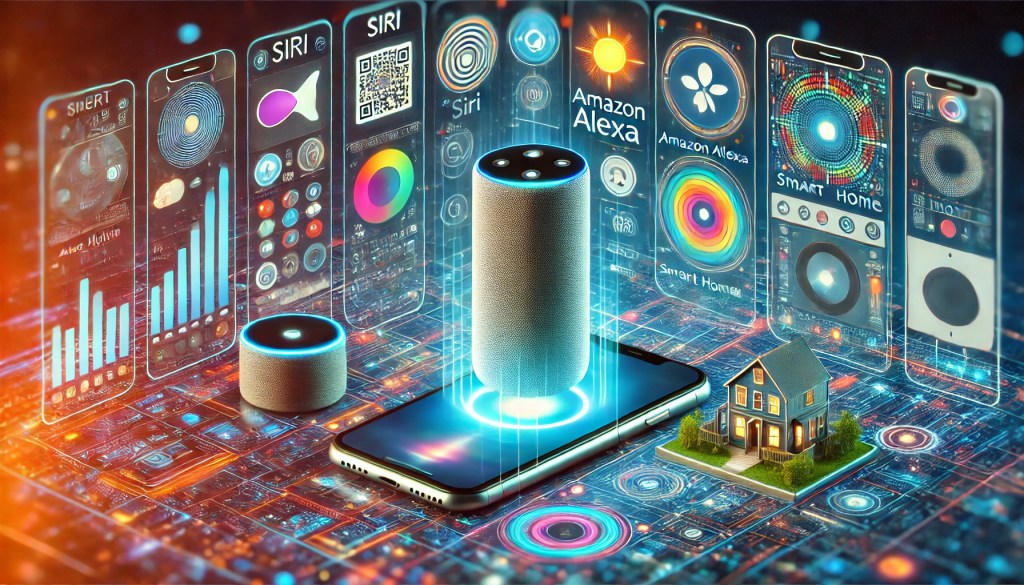
Voice-activated technology works with a combination of microphones, voice recognition software, and cloud computing. The software analyzes spoken words, identifies the command, and executes the appropriate response.
The technology has widespread applications, from accessibility tools for people with disabilities to improving efficiency in industries such as healthcare and customer service. Its ability to offer convenience and intuitive user experiences continues to drive its adoption in everyday life and business.
How Does Voice-Activated Technology Works :
1. Voice Capture
- The process begins with a microphone capturing the user’s spoken words as audio signals. Modern devices use high-quality microphones to ensure clarity.
2. Signal Processing
- The captured audio is converted into digital signals using analog-to-digital conversion (ADC).
- Noise reduction and filtering techniques are applied to remove background sounds and enhance the quality of the voice signal.
3. Speech Recognition
- The digital audio signal is sent to a speech recognition system, which breaks it down into smaller sound units, called phonemes.
- Using machine learning algorithms and a large database of language models, the system matches these phonemes to words and phrases.
4. Natural Language Processing (NLP)
- Once the spoken words are identified, NLP comes into play to understand the meaning and intent behind the words.
- This involves:
- Syntax analysis: Understanding the structure of the sentence.
- Semantic analysis: Grasping the context and meaning of the sentence.
5. Command Interpretation
- The system maps the recognized intent to specific actions or commands. For instance:
- If you say, “Play music,” it identifies the intent as a request to play audio.
- If you ask, “What’s the weather like?” it interprets this as a request for weather data.
6. Response Generation
- Once the command is understood, the system fetches the required information or executes the task.
- A text-to-speech (TTS) engine converts the response into spoken words, or the system provides output through a display or connected device.
7. Machine Learning and Adaptation
- Voice-activated systems, such as Amazon Alexa, Siri, or Google Assistant, continuously improve their accuracy using machine learning.
- They adapt to individual users by learning voice patterns, accents, and frequently used phrases.
Core Technologies Behind Voice-Activated Technology
- Automatic Speech Recognition (ASR): Converts speech into text.
- Natural Language Processing (NLP): Understands the meaning of the text.
- Text-to-Speech (TTS): Converts text into spoken words.
- Deep Learning: Helps in understanding accents, tone, and context.
Real-World Applications
- Smart home devices (e.g., Amazon Echo, Google Nest)
- Voice assistants in smartphones and cars
- Accessibility tools for individuals with disabilities
- Voice-controlled customer service bots
Types of Voice-Activated Technology :
- Voice Assistants
- Examples: Amazon Alexa, Google Assistant, Apple Siri, Microsoft Cortana.
- Use: Hands-free interaction for managing tasks, answering queries, and controlling smart devices.
- Smart Speakers
- Examples: Amazon Echo, Google Nest, Apple HomePod.
- Use: Voice-controlled devices for playing music, setting reminders, and controlling smart home ecosystems.
- Voice-Controlled Smart Home Devices
- Examples: Thermostats (Nest, Ecobee), smart lights (Philips Hue), and smart locks.
- Use: Manage home appliances with voice commands for convenience and energy efficiency.
- Voice Recognition Software
- Examples: Dragon NaturallySpeaking, Google Voice Typing.
- Use: Dictation, transcription, and hands-free text input for accessibility and productivity.
- Voice-Activated Cars
- Examples: Tesla Voice Commands, Apple CarPlay, Android Auto.
- Use: Control navigation, make calls, or adjust settings while driving.
- Wearable Technology with Voice Control
- Examples: Smartwatches (Apple Watch, Samsung Galaxy Watch) and AR glasses.
- Use: Hands-free communication and managing tasks on-the-go.
- Voice-Controlled Entertainment Systems
- Examples: Amazon Fire TV, Roku with voice remotes.
- Use: Search for content, adjust volume, and switch channels with voice commands.
- Voice Biometrics
- Examples: Banking apps, security systems.
- Use: Authentication and security through unique voice patterns.
- Voice-Controlled Healthcare Devices
- Examples: Voice-operated blood pressure monitors, medication reminders.
- Use: Aid patients in managing health tasks easily.
- Voice-Activated Chatbots
- Examples: IVR systems in customer service.
- Use: Automating customer interactions with conversational AI.
Advantages and Disadvantages of Voice-Activated Technology :
| Advantages | Disadvantages |
|---|---|
| Convenience: Enables hands-free operation, making it easy to multitask. | Accuracy Issues: May misinterpret commands, especially with accents or background noise. |
| Accessibility: Helps individuals with physical disabilities or limited mobility use devices effectively. | Privacy Concerns: Voice data can be collected and stored, raising security risks. |
| Efficiency: Speeds up tasks like searching for information, sending messages, or controlling devices. | Limited Functionality: Some commands or integrations may not be available or well-supported. |
| Integration: Works with smart homes, allowing control of lights, thermostats, and appliances. | Dependence on Internet: Requires a stable internet connection for optimal performance. |
| Language Learning: Can assist in pronunciation and language practice. | Misactivation: Devices may activate unintentionally when hearing similar-sounding words. |
| Personalization: Adapts to user preferences through AI, enhancing the user experience. | Learning Curve: Users may take time to adapt to specific commands and device behavior. |
| Time-Saving: Quickly performs repetitive tasks like setting reminders or creating to-do lists. | Cost: Some advanced voice-activated devices or systems can be expensive. |
| Multitasking Capability: Allows users to interact with technology while performing other activities. | Security Risks: Vulnerable to hacking or exploitation, such as voice imitation attacks. |
Voice Recognition vs. Speech Recognition :
| Feature | Voice Recognition | Speech Recognition |
|---|---|---|
| Definition | Identifies and distinguishes individual voices. | Converts spoken words into text or commands. |
| Primary Focus | Focuses on identifying who is speaking. | Focuses on understanding what is being said. |
| Purpose | Authentication, personalization, and security. | Dictation, command execution, and transcription. |
| Key Applications | Voice biometrics, user authentication, voice profiles. | Virtual assistants, transcription services, voice control. |
| Technology Used | Utilizes biometric voiceprints for identification. | Utilizes Natural Language Processing (NLP) and acoustic modeling. |
| Accuracy Factors | Depends on voice patterns and characteristics. | Depends on clarity, accents, and background noise. |
| Examples | Smart locks, personalized experiences in apps. | Virtual assistants like Siri, Alexa, and Google Assistant. |
| Hardware Requirements | Often requires advanced microphones for accuracy. | Works on basic microphones but benefits from advanced models. |
| Complexity | More complex due to individual voice identification. | Less complex as it focuses on speech patterns. |