Bitcoin, designed by Satoshi Nakamoto, is a digital asset often referred to as a digital currency, digital cash, virtual currency, electronic currency, digital gold, or cryptocurrency. Its classification as a currency is disputed. Economists note that while it possesses qualities of a currency, it still has room to meet all criteria. Its best use case is as a medium of exchange, but volatility hinders its role as a stable store of value, and most retailers accepting bitcoin primarily use other currencies for accounting.
The classification of bitcoin by the United States government remains unclear, with conflicting rulings. Some consider it a currency, while others define it as an asset or decentralized virtual currency. Different countries classify bitcoin variously, with some labeling it an intangible asset or a “crypto token.” The People’s Bank of China views it as an investment target rather than a currency.
Media, journalists, and academics also debate how to describe bitcoin. Some distinguish between “real” money and bitcoin, while others consider it real money. The Wall Street Journal categorized it as a commodity, while Forbes referred to it as a digital collectible. Two University of Amsterdam computer scientists coined the term “money-like informational commodity.”
In addition to its currency-like characteristics, bitcoin is also considered a payment system.
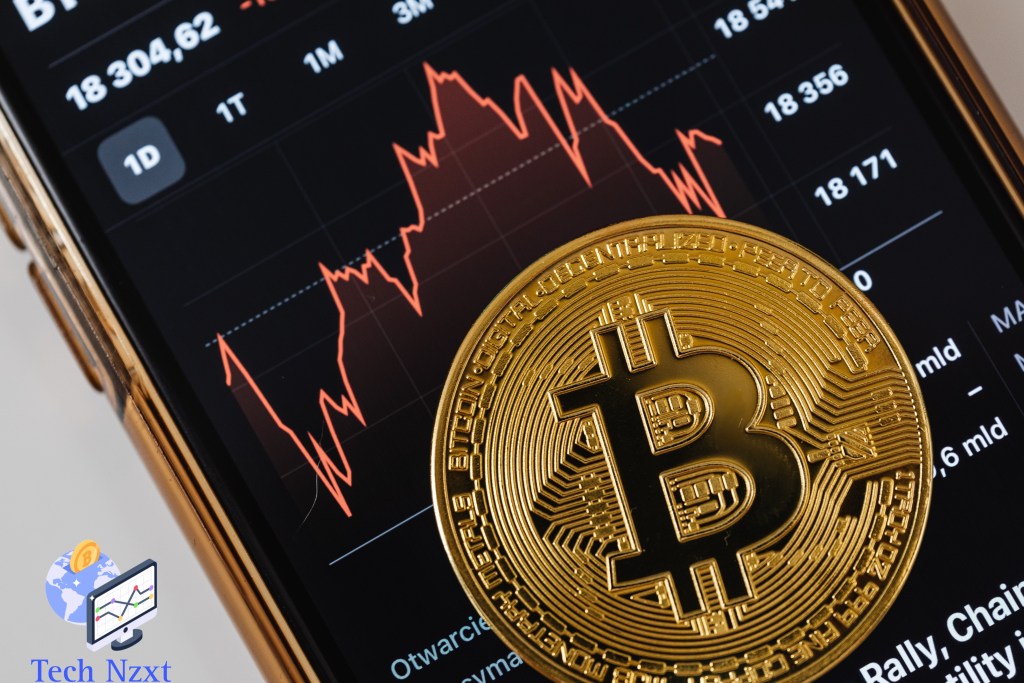
What is Economics of Bitcoin & Key Aspects :
The economics of Bitcoin refers to the study and analysis of how the cryptocurrency functions within its ecosystem and how it impacts the broader economic landscape. Bitcoin, created in 2009 by an anonymous person or group of people using the pseudonym Satoshi Nakamoto, is the first and most well-known decentralized digital currency.
Key aspects of the economics of Bitcoin:
- Supply and Scarcity: Bitcoin’s supply is limited to 21 million coins, making it a deflationary asset. The scarcity of Bitcoin is built into its protocol, with a decreasing rate of issuance over time. This limited supply is often contrasted with fiat currencies that can be printed by central banks, potentially leading to inflation.
- Mining and Block Rewards: Bitcoin operates on a decentralized network of computers (nodes) that validate and record transactions on a public ledger called the blockchain. Miners use computational power to solve complex mathematical puzzles, and when a block of transactions is added to the blockchain, the miner is rewarded with newly minted bitcoins and transaction fees.
- Halving Events: Approximately every four years, the block reward for miners is halved. This event, known as the “halving,” reduces the rate at which new bitcoins are created, further contributing to the scarcity of the asset. Halving events have historically been associated with bull markets in the price of Bitcoin.
- Demand and Market Price: Like any other asset, the price of Bitcoin is influenced by supply and demand dynamics. As demand for Bitcoin rises or falls relative to its supply, the market price will react accordingly. Various factors influence demand, including macroeconomic conditions, geopolitical events, regulatory developments, and technological advancements.
- Store of Value and Medium of Exchange: Bitcoin is often considered a store of value similar to gold, with proponents arguing it can act as a hedge against inflation and economic instability. Additionally, it can be used as a medium of exchange for goods and services, although its price volatility has hindered its widespread adoption as a currency for everyday transactions.
- Volatility: Bitcoin is known for its price volatility, which can be significant over short periods. Rapid price fluctuations can be both an opportunity and a risk for investors and traders.
- Utility and Use Cases: Over time, Bitcoin has seen various use cases emerge beyond being an investment asset. These include remittances, cross-border payments, censorship-resistant fundraising (Initial Coin Offerings or ICOs), and a means of facilitating financial inclusion in regions with limited banking infrastructure.
- Regulation and Legal Environment: The legal and regulatory environment surrounding Bitcoin varies from country to country. Governments and financial regulators have grappled with how to classify and regulate cryptocurrencies, which can impact their adoption and use in different jurisdictions.
It’s important to note that the economics of Bitcoin is a complex and evolving field of study. The cryptocurrency space continues to develop, and new research and insights are constantly emerging as it becomes more integrated into the global financial system.
Price and Volatility of Bitcoin :
In 2014, Bitcoin’s volatility was significantly higher than that of traditional assets like gold, the S&P 500, and the US dollar. Some attributed this volatility to the lack of stabilization mechanisms, insufficient liquidity, and uncertainty about its long-term value. Despite this, there were use cases where volatility did not matter, such as online gambling, tipping, and international remittances.
The Bitcoin price has experienced cycles of appreciation and depreciation, often referred to as bubbles and crashes. Notable cases include the rapid rise in 2011 from $0.30 to $32, followed by a drop to $2. In 2013, it reached an all-time high of $1,242, possibly influenced by price manipulation. However, in 2014, the price fell sharply and remained depressed at around half of 2013 prices.
As the use of Bitcoin for business-to-consumer payments increases, economic theory suggests that the volatility of its prices will decrease. This is because increased use reduces sensitivity to speculators’ beliefs about its future value. In April 2016, Bitcoin was considered slightly more stable than gold, and in March 2017, its price exceeded the value of an ounce of gold for the first time.
A study in Electronic Commerce Research and Applications found that the value of the Bitcoin network, as measured by its price, was proportional to the square of daily unique users participating in the network, showing network effects linked to user adoption.
Speculative Bubble of Bitcoin :
The provided text contains various statements from notable economists, investors, and central bank officials regarding Bitcoin. These individuals have expressed their views on Bitcoin, characterizing it as a speculative bubble, a mirage, a bubble, and even worse than the tulip mania. Some have criticized its lack of intrinsic value, its use by criminals, and its limited utility as a means of payment.
The opinions cited here include:
- Nobel laureates Paul Krugman, Robert J. Shiller, Joseph Stiglitz, Richard Thaler, James Heckman, Thomas Sargent, Angus Deaton, and Oliver Hart have all characterized Bitcoin as a speculative bubble.
- Renowned investors Warren Buffett and George Soros have referred to Bitcoin as a “mirage” and an “economic bubble,” respectively.
- Alibaba chairman Jack Ma has called Bitcoin a “bubble,” while economist John Quiggin has labeled it the “most demonstrably valueless financial asset ever created.”
- Researchers Neil Gandal, JT Hamrick, Tyler Moore, and Tali Oberman suggested that price manipulation likely caused a significant price spike in late 2013.
- Central bank officials, including Alan Greenspan, Ben Bernanke, Janet Yellen, Agustín Carstens, Vítor Constâncio, and Nout Wellink, have also expressed concerns about Bitcoin’s stability and lack of use as a medium of transactions.
- Professor Nouriel Roubini has strongly criticized Bitcoin, calling it the “mother of all bubbles” and pointing out the obstacles to its underlying blockchain technology.
- Bitcoin’s high volatility and irrational behavior in the market have been highlighted by Nobel laureate Richard Thaler.
- Some developers of Bitcoin, such as Gavin Andrese and Mike Hearn, have warned about the potential for bubbles in the cryptocurrency market.
Overall, this collection of statements showcases a wide range of perspectives on Bitcoin, with many prominent figures expressing skepticism and concerns about its value, utility, and potential risks.
Bitcoin transactions are predominantly carried out on cryptocurrency exchanges rather than with merchants due to delays in blockchain payment processing, which typically takes around ten minutes, making it impractical for retail environments. . Prices are not commonly quoted in bitcoin units, leading to frequent conversions to mainstream currencies. In 2017 and 2018, bitcoin acceptance among major online retailers declined due to scalability issues, resulting in high transaction fees and long processing times. Bloomberg reported a significant decline in the handling volume of crypto merchant processing services during that period. Bitcoin’s high price volatility and transaction fees make it unsuitable for small retail purchases. However, it has found applications in real estate transactions, with properties being sold for bitcoin in both the US and Europe. Additionally, some US political candidates, such as Jeff Kurzon, have expressed their willingness to accept campaign donations in bitcoin.